Fit for trade use
Forged, machined, insulated, or molded choices should be visible in product data and relevant to the application.
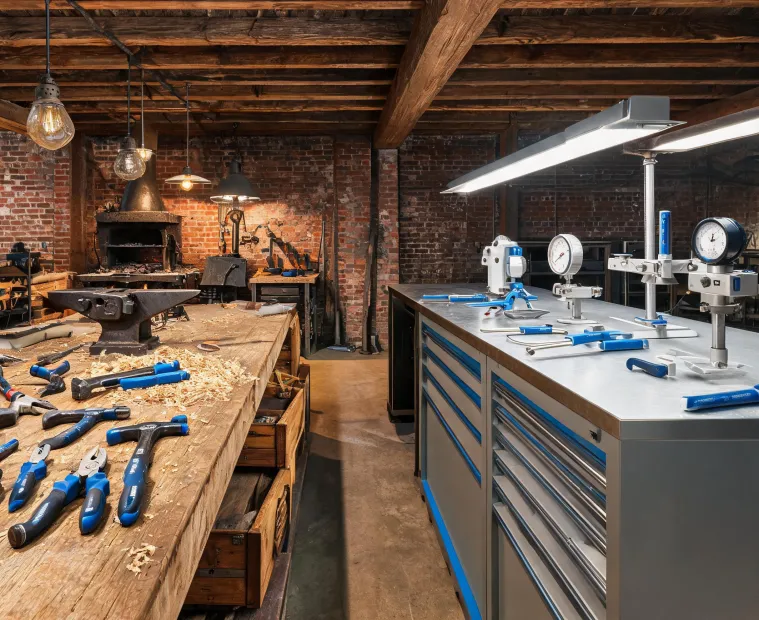
The brand voice for this site is precise and professional: practical hand tools, clear specifications, and support language written for people who buy, issue, inspect, and use tools every day.
Klein Tools is presented here as a professional tool authority rather than a general hardware shop. The story starts with the trades: electricians, maintenance crews, installers, utility workers, service technicians, and purchasing managers who depend on consistent hand-tool performance. A tool brand earns trust when a supervisor can explain why a cutter, driver, tester, or storage system belongs in a kit. That explanation may involve forged steel, induction-hardened edges, cushioned grips, CAT-rated meters, hot-riveted joints, part-number continuity, or simply the ability to replace a known item without restarting qualification.
The site avoids romantic language and focuses on operating reality. A crew does not need another vague promise about toughness. It needs clear product families, visible specification signals, warranty routing, and catalog support. That is why the about page uses a narrative format with pull quotes and proof points, but keeps every claim tied to the context of tool rooms, service vehicles, training benches, and distributor counters. A brand history becomes useful when it helps a buyer understand how current product decisions are made.
Long service life is not a slogan by itself; it is a chain of material choice, fit, inspection, replacement planning, and field feedback.
For a global market, the practical challenge is also consistency. Different regions may use different distributors, safety conventions, and jobsite habits, yet the buyer still expects the same disciplined catalog. This page frames Klein Tools as a bridge between heritage and present-day purchasing: old enough to be trusted, current enough to support modern electrical testing, organized storage, and application-specific tool kits. That balance reflects how Klein Tools communicates: proof, structure, and direct language over soft storytelling.
Forged, machined, insulated, or molded choices should be visible in product data and relevant to the application.
Part naming and category grouping help buyers rebuild kits without losing track of critical tool functions.
Catalog, dealer, warranty, and demo questions should move through defined contact paths rather than informal guesswork.
Tool selection affects apprentices, foremen, maintenance planners, safety managers, and procurement teams at the same time. A screwdriver with the wrong tip, a meter with unclear category guidance, or a cutter that fails in the wrong material can slow a crew and create avoidable debate. The site therefore treats community impact as trade enablement: clearer kits, better comparison tables, easier support routing, and less confusion between retail look-alikes and professional-grade requirements.
That practical view also supports distributors. When a buyer can identify product family, application, quantity, and support need in a single request, the dealer response becomes faster and more accurate. This is the quiet work behind a dependable tool brand.
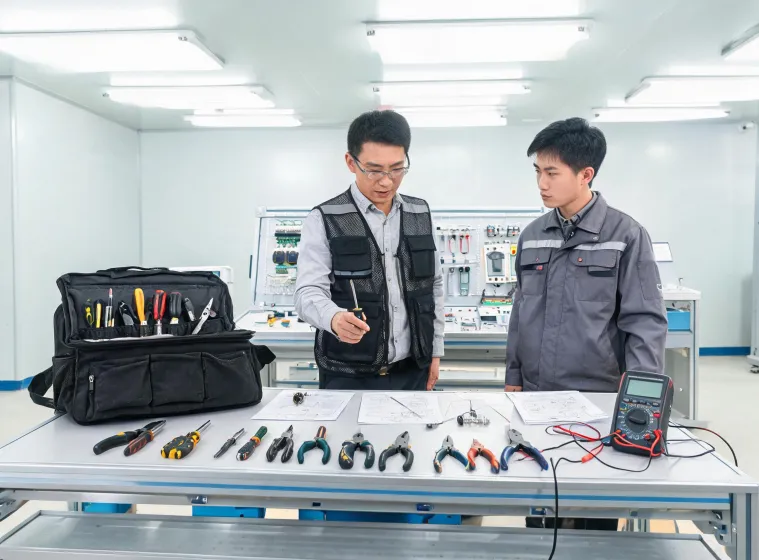
Share the crew role, application environment, and target tool categories so support can guide the next step.